Feed Monitoring and Management
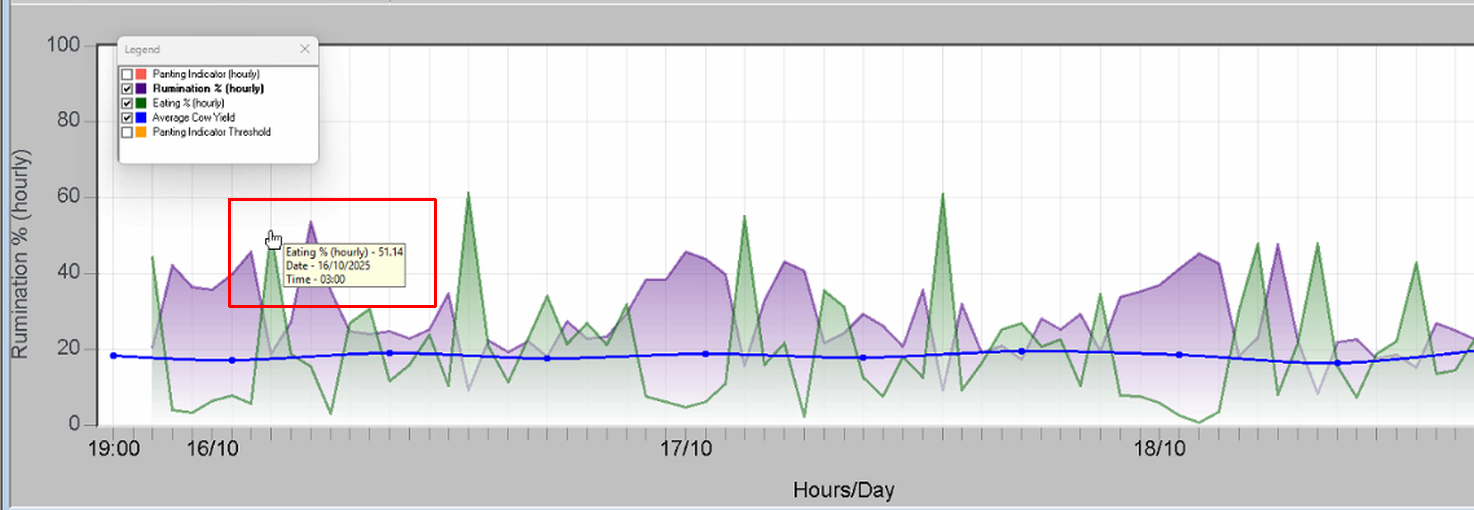
The heat stress graph provides more than just an insight into how temperatures affect group comfort. The hourly feeding and rumination patterns for the last 72 hours can be applied to monitor and improve your feeding management.
Note: To ensure data is accurate, a minimum of 75% of the group (and a minimum of 20 animals) must wear an AfiCollar.
Key Benefits of Monitoring
-
Improve Feeding Management - Use the hourly feeding and rumination patterns to monitor and improve your feeding management practices.
-
Identify Issues - Monitoring eating spikes daily helps identify issues early and improve eating routines on your farm.
-
Diagnose Problems - Changes in group behavior can indicate health issues, group comfort issues, management issues (like high density or too many group changes), or feed issues.
-
Prevent Production Loss - Eating decreases directly impact milk production, therefore it is crucial to identify feed issues early and implement corrections.
Understanding the graph:
Hover on the spikes to display eating or rumination data.
Pattern changes, such as drops in eating or rumination, can point to problems such as:
-
Late/Inconsistent Delivery - A late or inconsistent feed delivery will cause a significant drop in eating.
-
Feed Quality - Drops can also point to issues like changes in composition, moldy food, or inaccessible food.
Note: To help identify issues, compare the eating and rumination data to different groups, to determine if the issue is widespread or limited to a single group.
|
Column |
Description |
|---|---|
|
Purple |
Percentage of time the group spent ruminating this hour. |
|
Green |
Percentage of time the group spent eating this hour. |
The heat stress report used for hourly eating and rumination data is only available to farms with the AfiCollar configuration.
